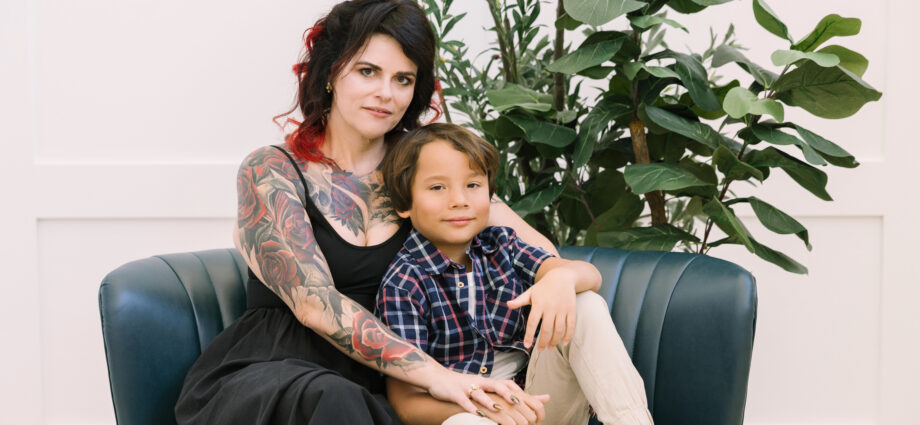
For Julia Do, motherhood is not a fixed definition. It is something she is actively questioning, reshaping, and rediscovering in real time.
At 42 years old, Julia is a mother of one based in Lake Forest, California. Over the past year, her life has shifted in ways she never expected. After the loss of her own mother, she has found herself navigating not only grief, but a deeper internal search for understanding, and what it means to be a mother, a woman, and a person still figuring out her place in the world.
Each day, she is learning how to be kinder to herself. That means letting go of constant self-criticism and allowing space to grow, even when the path forward feels unclear.
Alongside motherhood, Julia is also rebuilding her professional identity. After more than a decade working with adults with developmental disabilities, including in management roles, she is now stepping into entrepreneurship. She is building her brand through JDSkye Solutions as a mobile notary public, while also taking a bold leap into business ownership as a partial owner of a new restaurant, bar, and nightclub.
At the same time, she lives with bipolar disorder, navigating emotional highs and lows while still trying to understand her baseline. Physically, she faces daily challenges with severe arthritis and bone damage, meaning each day comes with its own level of pain.
Through all of this, one constant remains: her son.
He is what grounds her, motivates her, and reminds her why she continues to push forward, striving to grow and stay as healthy as possible.
Redefining What It Means to Be a Mother
The loss of her own mother has deeply impacted how Julia views motherhood. It has led her to question not only her relationship with her mother, but also what truly defines someone as a parent.
For Julia, motherhood is not something that begins and ends with giving birth. It is something far more complex and intentional. It is rooted in the desire to offer unconditional love, to nurture in the best way possible, even if that means learning a completely different approach than what was experienced growing up.
There have been moments where she has questioned whether she even knows how to love. But through that exploration, she has come to understand that love is not one-size-fits-all. Every person expresses it differently, and motherhood is no exception.
To her, motherhood means showing up every day and trying your best to be someone your child can trust, feel safe with, and be vulnerable around. It means guiding rather than controlling, supporting rather than criticizing, and creating an environment where a child can grow into their own identity.
It is also a responsibility to equip her son with the knowledge and awareness needed to navigate life, make decisions, and learn from both success and failure. More than anything, she hopes to raise an independent thinker, someone who questions the world and forms his own understanding of it.
Navigating a Season of Change and Challenge
This past year has brought significant changes for both Julia and her son. Together, they have had to process the loss of his grandmother, relocate to a new home, adjust to a new school, and build new social connections.
These transitions have not been easy.
Her son has faced challenges with emotional regulation and a sense of control, often resulting in difficult and emotionally intense days. As a mother, Julia has had to learn how to respond in ways that validate his feelings while also guiding him through them.
This has required her to become more aware of her own emotional responses. She recognizes that if she is not regulated, her ability to support her son becomes compromised. As a result, motherhood has become just as much about managing her own emotions as it is about helping him manage his.
With a recent diagnosis of ADHD, she has also taken on the role of advocate and support system, working to identify strategies that will help him succeed both at school and at home.
Despite the challenges, she remains focused on helping her son thrive. She strives to ensure that his happiness shines through, even on the difficult days. At the same time, she acknowledges that she often pushes herself to appear strong, choosing to “fake it until she makes it” in order to maintain stability for him.
In those moments, even small victories, his and hers, become worth celebrating.
Discovering Strength and Identity Beyond Motherhood
Through this journey, Julia has been forced into a deeper level of self-discovery. Motherhood, while central to her life, is not the only part of who she is.
She has begun exploring her own identity beyond being a parent—her interests, her needs, and her purpose. While motherhood can be fulfilling, she recognizes that for her, it does not fully define her. There is a desire for more, and she is learning to honor that.
Along the way, she has discovered a level of strength she did not previously recognize in herself. She has also realized that she sometimes amplifies situations in her mind, leading to unnecessary stress and frustration.
However, growth has come in learning how to slow down, take things one day at a time, and accept that not everything needs to be solved all at once.
Each day offers a reset. A new opportunity to try again.
A Message to Mothers Who Feel Like They’re Struggling
If Julia could share one honest truth with other mothers, it would be this: motherhood is hard.
It pushes you to your limits and tests you in ways you never expected. It can awaken an inner critic that makes you question your worth, your identity, and whether you are doing enough.
There are even moments, she admits, where the thought of running away crosses your mind, not because you don’t love your child, but because of how overwhelming it can feel.
And those thoughts do not make you a bad mother.
They make you human.
Julia believes it is essential for mothers to check in with themselves regularly. Self-care is not optional, it is necessary. Taking time away, even briefly, to reset and recharge can make all the difference in how you show up for your family.
She encourages mothers not to feel guilty for doing what they need to do to take care of themselves. Being mindful of your emotions, acknowledging when you need help, and allowing yourself to ask for it are all part of being a strong and present parent.