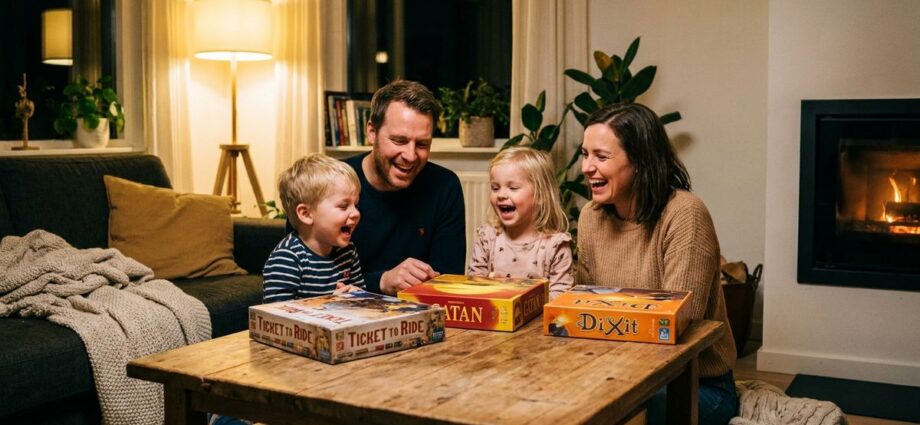
A familiar board game is a small designed system. It has a goal, permitted actions, limits, information, and a way to end. Reverse-engineering the game means taking it apart conceptually to understand how those pieces work together. Families can practice logic, explanation, probability, design, and fair testing without needing to invent a game from nothing.
Choose a generic game the household already knows and is allowed to examine. The activity focuses on rules and play, not copying protected artwork or publishing someone else’s material.
Describe the system before judging it
Play a short round and pause after several turns. Ask what each player is trying to achieve, what choices are available, and what information is hidden or visible. Record the rules in the family’s own words, then compare them with the official instructions.
Readers may also want to visit America For Purchase. “A choice that changes what another player can do” is a meaningful observation even without a technical label.
Separate a rule from a strategy. A rule states what is allowed; a strategy is a player’s idea about what may work.
Map the parts and their jobs
Lay out components safely and identify what each one does. A board may limit movement, cards may introduce variation, and tokens may show position or ownership. Ask what information would be lost if a component disappeared.
Create a system map:
- Goal and conditions that end the game
- Actions a player can choose or must take
- Resources, limits, and sources of uncertainty
- Feedback that shows progress or a setback
Include setup and cleanup. These are part of the experience even though they happen outside the main turns.
Change one rule and predict the result
Choose a small, reversible change, such as starting with one more resource, reducing a movement range, or altering when a round ends. Before playing, each person predicts how the change may affect time, difficulty, choices, or fairness.
You can also visit businessserviceschicago.com for more reading. Do not assume a few rounds prove that one version is objectively balanced; random outcomes and player experience can affect results.
Play several short tests while keeping every other rule stable. Note what happened and whether the original prediction was supported. If players forget the change, rewrite it as one clear sentence and place it where everyone can see it.
Explain the design and reflect on fairness
After testing, ask each participant to explain the purpose of the original rule. For a related read on this site, see How to Build a Home Mini-Exhibition Around One.
Discuss what “fair” means. Equal starting conditions do not always produce equal chances when age, reading, speed, or prior experience differs. Consider adaptations that improve access without pretending every player needs the same support. Make changes collaboratively rather than surprising one participant.
Invite children to design a tiny variant with a clear goal and one changed mechanism. They should write setup, turn order, and ending conditions so another family member can play without an oral explanation. Confusion during testing is useful feedback about the instructions.
Track turns only when the record answers a question. A family investigating whether first position has an advantage can note who starts and who reaches the goal. If the question is about clarity, record where players ask for help instead. Data collection should serve the design question rather than cover the table with unnecessary numbers.
Separate excitement from evidence. A new rule may feel fun because it is unfamiliar, while a familiar rule may feel fair because players have learned its strategy. Test the variant again after the novelty fades and invite players with different experience levels where appropriate.
Discuss unintended strategies. Players may discover a legal action that repeatedly blocks progress or removes meaningful choice. Instead of forbidding it immediately, ask which rule permits it and what small change could preserve the intended decision. This is a practical lesson in how systems can produce results their designers did not predict.
Return the original components and preserve any house rules separately. Credit the source game when discussing the activity, and do not present a minor variation as an original commercial design.
Reverse-engineering reveals that a game is more than its theme. By describing rules, mapping components, testing one change, and discussing evidence, families can see how systems guide behavior. The same habits—separating rules from strategies and changing one variable at a time—transfer to many learning problems beyond the game table.