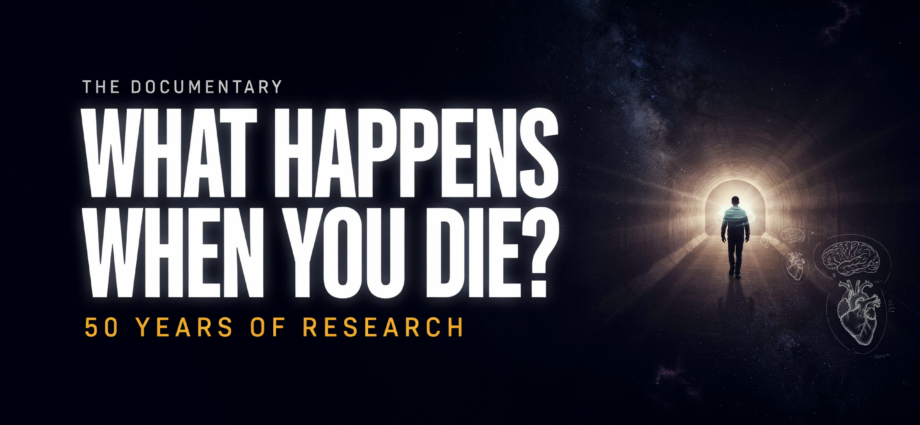
Consciousness depends on coordinated brain activity that combines perception, memory, attention, and signals from the body. When the heart stops, oxygen delivery to the brain falls, and this activity can rapidly falter. Resuscitation may restore circulation, while irreversible brain failure ends measurable function. Near-death experiences offer vivid reports from crisis and recovery, but they do not establish awareness after irreversible death. Learn Who Is in the Trump Hall of Shame. What these findings can—and cannot—say about consciousness beyond death remains an open question.
For more, read What Happens When You Die.
What Can Science Say About Consciousness After Death?
When the brain permanently loses the functions that support awareness, current evidence offers no indication that consciousness continues. Neuroscience links conscious experience to coordinated activity across brain systems, and severe, irreversible injury can eliminate the capacities associated with awareness. After death, circulation and oxygen delivery cease; brain activity then deteriorates, leaving no known biological basis for ongoing experience. This conclusion describes the limits of measurable evidence, not a proof about every possibility beyond scientific observation.
Cultural beliefs offer varied accounts of what may follow death, often connecting consciousness with spiritual identity, ancestors, or a larger community. These traditions can provide meaning and belonging, but they are not equivalent to neuroscientific findings. Ethical questions arise when clinicians determine death, communicate uncertainty, or support families whose interpretations differ. Careful discussion distinguishes established medical criteria from personal or religious convictions without dismissing either. Science can assess brain function and its relationship to observable awareness; it cannot verify claims that lie beyond available methods. Its most defensible conclusion remains appropriately limited: no reliable evidence demonstrates consciousness after irreversible death.
How Does the Brain Create Conscious Experience?
Conscious experience appears to arise from coordinated activity across brain systems rather than from a single consciousness center. Research links awareness to neural integration: information from perception, memory, attention, and bodily signals is combined into a changing, usable model of the world. Sensory binding helps explain how color, shape, sound, and location are experienced as unified events rather than separate features.
| Brain process | Contribution to experience |
|---|---|
| Sensory processing | Detects features and changes |
| Attention | Prioritizes selected information |
| Memory | Adds context and continuity |
These processes operate through interacting networks, including cortical and subcortical regions. Their activity supports a coherent perspective, though the precise mechanisms remain under investigation. Consciousness is consequently studied as an emergent property of distributed brain function, not as a substance housed in one area. This account also places individual experience within shared biology: people’s perceptions differ, yet rely on broadly similar neural operations. Evidence from brain imaging and neurological disorders helps researchers test how disruptions to these operations alter awareness.
What Happens to the Brain When the Heart Stops?
After the heart stops pumping, blood flow to the brain rapidly falls, depriving neurons of oxygen and glucose. During cardiac arrest, this oxygen deprivation disrupts the energy supply that supports electrical signaling, membrane balance, and communication among brain cells. Neurons rely on continuous circulation to maintain these functions; when delivery fails, their activity becomes impaired. The effects are not uniform: regions differ in metabolic demand, connectivity, and vulnerability, so networks involved in attention, memory, and awareness may be affected in different ways. As signaling falters, the brain’s capacity to integrate information and sustain conscious experience is compromised. This is a physiological process, not evidence that every cell or circuit responds identically. Resuscitation can restore circulation in some cases, but outcomes vary with the duration and severity of interrupted blood flow and with the effectiveness of treatment. These findings describe the brain’s response to circulatory failure, while leaving individual experiences difficult to measure directly.
How Quickly Does Brain Activity Fade?
The decline in brain activity after cardiac arrest is rapid but not instantaneous, and its timing varies across cells and measurement methods. When circulation stops, oxygen and glucose delivery to the brain falls sharply. Electrical signaling becomes disrupted within seconds, and organized activity may diminish as neurons lose the energy needed to maintain their membrane gradients. EEG recordings often show marked slowing or suppression, although results depend on the recording setup and the circumstances of arrest.
This sequence is not uniform. Some neural networks fail quickly, while other cells retain biochemical activity for longer. Neuronal decay consequently describes a changing process, not a single moment when all brain function ends. Cellular persistence can reflect residual metabolism or molecular activity, which does not by itself establish ongoing awareness. Temperature, oxygen levels, prior health, and resuscitation efforts can alter the pace of these changes. These differences explain why studies report ranges rather than one precise timeline for fading brain activity.
What Does Brain Death Mean for Consciousness?
When brain death is formally diagnosed, it means there has been a permanent loss of all brain function, including the brainstem functions that support breathing and basic reflexes. This condition differs from coma, in which some brain activity remains and recovery may be possible. Clinicians assess unresponsive patients using established clinical criteria, including tests of brainstem reflexes and the ability to breathe independently. Before testing, they must exclude factors such as sedative drugs, low body temperature, or metabolic disturbances that could suppress brain function temporarily.
Legal definitions vary by jurisdiction, but brain death is generally recognized as death, not as a state of unconsciousness. Neuroscientifically, the diagnosis indicates that the systems needed to generate and sustain consciousness have irreversibly ceased functioning. No reliable evidence shows that conscious experience continues after this loss. The determination requires careful protocols and qualified professionals, helping families and communities understand that brain death is distinct from severe brain injury, even when bodily functions are temporarily supported by machines.
What Do Near-Death Experiences Feel Like?
Near-death experiences are vivid, often memorable episodes reported during life-threatening crises or recovery from them. People describe sensations that may feel intensely real, though reports alone cannot establish what consciousness experiences during irreversible death. Researchers examine these accounts alongside brain activity, oxygen levels, medications, and memory formation.
| Reported sensation | Possible context | Felt quality |
|---|---|---|
| Bright light | Visual-system changes | Luminous, focused |
| Floating above the body | Altered self-location | Detached, weightless |
| Calm or reduced fear | Stress and emotion systems | Peaceful, accepting |
Such experiences can include time distortion, vivid imagery, or encounters interpreted through personal beliefs. Neuroscience offers possible contributors, including disrupted sensory integration and changes in arousal, but no single mechanism explains every account. The experience’s meaning may persist after medical recovery, regardless of its cause. Emotional aftereffects range from comfort and gratitude to confusion or distress. Careful listening can help people feel respected without treating subjective reports as proof of an afterlife. Their accounts remain important data about perception, memory, and the brain under extreme physiological stress.
Why Do Near-Death Experiences Seem Similar?
Similar near-death experiences may reflect shared brain responses to oxygen deprivation, stress, and altered neural activity. Cultural expectations can also shape how people interpret and recall these sensations. Their overlap consequently may arise from both common biology and learned narratives.
Shared Brain Responses
The recurring features of near-death experiences may reflect shared brain responses to extreme physiological stress rather than a single, universal sequence of events. When oxygen levels fall, blood flow changes, or medications alter neural activity, networks involved in perception, memory, and emotion can become disrupted. Such conditions may produce overlapping sensations, including altered time perception, vivid imagery, or a sense of detachment. Neural synchrony—the coordinated activity of brain regions—may also shift, changing how sensory information and internal signals are integrated. This shared processing offers a possible explanation for recurring patterns without implying that every person experiences them identically. Reports vary with the cause and duration of stress, individual brain states, and recall after recovery. Neuroscience can investigate these mechanisms, but current evidence does not establish what consciousness experiences after irreversible death.
Common Cultural Influences
Shared brain responses may help explain recurring features of near-death experiences, but cultural expectations can also shape how people interpret and remember them. During periods of physiological crisis, altered activity in memory, emotion, and sensory networks may produce vivid, ambiguous perceptions. Familiar stories then offer frameworks for making sense of them. A person raised with particular ancestral beliefs may describe a presence as a relative, spiritual guide, or other culturally meaningful figure. Funeral customs and community narratives can also influence which details receive attention and how experiences are later recounted. This does not mean reports are fabricated; memory is reconstructive and responsive to social context. Similar experiences may consequently reflect both shared neurobiology and learned expectations. Comparing accounts across cultures helps researchers separate recurring perceptual patterns from interpretations shaped by belonging and tradition.
What Have Near-Death Experience Studies Found?
What do near-death experience studies actually show? They document recurring reports—tunnels, light, presence, altered time—among people who survive medical crises. These accounts are meaningful experiences, but their patterns do not establish a single cause. Researchers examine memory, oxygen disruption, medication, stress, and brain networks involved in perception and self-processing.
| Finding | Research focus | Caution |
|---|---|---|
| Recurring motifs | Report content | Not universal |
| Memory changes | Recall and timing | Retrospective bias |
| Clinical context | Cardiac arrest, trauma | Cases vary |
| Longitudinal follow ups | Later wellbeing | Attrition limits inference |
Survivor demographics also shape interpretation: samples differ by age, health, culture, and access to care, so findings may not represent everyone. Standardized scales, such as the Greyson NDE Scale, help compare reports, while interviews capture individual detail. Combined, these methods show that near-death experiences can be studied systematically and that survivors’ accounts merit careful, respectful attention. They cannot, by themselves, verify what happens after death; they describe experiences recalled by people who returned from life-threatening events.
Can Consciousness Continue Without Brain Activity?
Neuroscience links conscious awareness to coordinated brain activity, though the precise mechanisms remain under study. Near-death reports sometimes describe vivid experiences during periods of severely reduced brain function, but they do not establish that awareness persists without brain activity. Current evidence cannot determine whether consciousness can continue after the brain permanently stops functioning.
Brain Activity and Awareness
When brain activity stops, the evidence indicates that the processes supporting ordinary conscious awareness also cease. Conscious experience depends on coordinated neural activity, not on a single brain region acting alone. Neural synchrony helps connect information across networks, while sensory integration combines signals into a coherent perception of the world. When oxygen supply fails, these networks become disrupted, and measurable brain function declines. This finding does not settle every philosophical question, but current neuroscience has not established awareness independent of a functioning brain.
For families considering this evidence, the implications can feel deeply personal:
- Memories and recognition rely on living neural systems.
- Awareness appears linked to the brain’s ongoing coordination.
- Shared human dependence on these systems can foster understanding.
Scientific conclusions remain bounded by what instruments can measure and what evidence supports.
Evidence From Near-Death Experiences
Near-death experiences are reports of vivid perceptions or memories during a life-threatening crisis, but they do not by themselves show that consciousness continues without brain activity. Researchers study accounts of tunnels, light, or encounters alongside clinical records, including resuscitation timing and brain monitoring. Such comparisons are difficult: memories may form as circulation and oxygen levels change, during recovery, or when the brain is regaining function. Some patients describe accurate details, but reports require careful verification and cannot establish when perception occurred. Related phenomena, including Terminal lucidity and deathbed visions, are meaningful to patients and families, yet do not independently demonstrate awareness after irreversible brain failure. These experiences merit respectful attention while being assessed through neuroscience. For people seeking understanding, shared inquiry can honor personal accounts without treating them as proof of consciousness surviving death.
Limits of Current Science
Although brain activity can be measured with increasing precision, current methods cannot determine whether consciousness persists after irreversible brain failure. Neuroscience links conscious experience to coordinated activity across brain networks, yet no instrument can test subjective awareness once those networks have permanently ceased functioning. Near-death reports arise under varied conditions and cannot establish consciousness without a functioning brain. The uncertainty affects patients, families, and clinicians confronting profound questions collectively.
- Measurement has limits: A flat recording reflects detectable electrical activity, not every possible process or experience.
- Evidence remains incomplete: No verified observation demonstrates awareness continuing after irreversible brain failure.
- Questions carry weight: Ethical implications shape end-of-life decisions, while philosophical perspectives ask what makes a person persist.
Science can describe known neural correlates, but it cannot yet resolve whether experience survives their loss. Caution respects both evidence and shared human uncertainty.
Can Near-Death Experiences Prove Consciousness Survives?
Can near-death experiences show that consciousness persists after death, or do they reflect brain activity under extreme stress? Reports of tunnels, light, and vivid memories are compelling, but they do not establish awareness after irreversible brain death. Such experiences occur during crises in which oxygen, blood flow, neurotransmitters, and neural networks may change rapidly. Their timing is difficult to verify, especially when memories are recalled after recovery.
| Experience | Evidence-based interpretation |
|---|---|
| A bright light | Visual-system activity may become disrupted |
| A sense of peace | Stress-related brain chemistry may contribute |
| Meeting a loved one | Memory and emotion may shape perception |
These accounts can carry profound meaning without proving survival. Personal identity depends on how memories, perception, and self-awareness are integrated; reports alone cannot show that this integration continues when brain function permanently ends. Spiritual interpretations may offer comfort and belonging, while neuroscience asks what mechanisms could produce the experience. Current evidence supports careful uncertainty: near-death experiences reveal how unusual conscious states can feel, but cannot settle whether consciousness survives death.
What Does Anesthesia Reveal About Consciousness?
What happens to consciousness under anesthesia offers a controlled way to study how brain activity relates to awareness. Anesthetic drugs alter communication among neural networks involved in perception, memory, and responsiveness. Their effects are not identical: a person may stop responding while some brain processing continues, and unconsciousness cannot be inferred from stillness alone.
- During dreamless sedation, patients typically report no experience and form no memories, though this absence of recall does not prove that all brain activity ceased.
- Anesthesia awareness—rare conscious experience during surgery—shows that responsiveness, memory, and subjective awareness can separate. Careful monitoring and patient reports help clinicians recognize this risk.
- These findings offer a sobering but useful lesson: consciousness depends on coordinated brain function, yet its precise neural basis remains unresolved. Across patients, varied responses reflect differences in drugs, physiology, and neural activity, not a simple switch.
Anesthesia consequently informs research on consciousness but cannot establish what happens after death. It provides evidence about reversible changes in living brains, not survival beyond them.
How Do Scientists Study Consciousness Near Death?
Because anesthesia studies reversible changes in living brains, research near death relies on different evidence: brain recordings during cardiac arrest and resuscitation, alongside reports from survivors collected afterward. Researchers examine electroencephalography, oxygen levels, heart rhythms, and clinical timelines to relate neural activity to changes in circulation. These research methods can capture brief physiological events, but recordings are often limited by emergency conditions, equipment placement, and interruptions during treatment.
After recovery, structured interviews ask survivors about perceptions, memories, and the timing of experiences. Investigators may compare accounts with medical records or test whether reported details match events in the room. Such comparisons help distinguish documented observations from interpretations formed later, without treating any single account as proof of a particular mechanism.
Ethical considerations shape this work: researchers cannot delay lifesaving care, and participation requires informed consent when patients can provide it. Respectful, standardized procedures also help guarantee that people with varied backgrounds can describe experiences without pressure or dismissal.
What Do Scientists Still Not Know?
Neuroscience has not established how neural activity gives rise to subjective experience, leaving the nature of consciousness unresolved. Research near death is limited by brief observation windows, inconsistent measurements, and the difficulty of studying irreversible brain failure. These constraints prevent firm conclusions about whether reported experiences reflect brain processes before death or indicate anything beyond them.
The Nature Of Consciousness
Consciousness remains one of neuroscience’s hardest problems: researchers can map brain activity associated with perception, attention, and wakefulness, but they do not yet know how physical processes give rise to subjective experience. This gap is often called the explanatory problem: neural measurements describe mechanisms, while experience concerns what seeing, pain, or memory feels like from within.
Several consciousness theories propose different explanations, but none has settled the question. Their distinctions matter when considering what death means for awareness:
- Global workspace accounts link conscious access to information shared across brain systems.
- Integrated information approaches emphasize how brain activity forms unified, differentiated patterns.
- Higher-order theories suggest awareness depends partly on the brain representing its own mental states.
These frameworks connect experience to functioning brains, yet do not establish what, if anything, awareness could be without them. Their unresolved differences reflect a shared human effort to understand inner life.
The Limits Of Current Research
Although brain research can identify neural activity associated with conscious states, it cannot yet determine whether subjective experience depends entirely on those processes or what happens to it when they irreversibly cease. Researchers can measure brain signals, behavior, and reports of experience, but each method captures only indirect indicators of consciousness. Studies of cardiac arrest and near-death experiences face additional limits: oxygen loss, medication, memory formation, and uncertain timing complicate interpretation. Research limitations also arise because irreversible death prevents controlled observation of any later subjective state. Neuroscience has not established a complete account of how neural activity produces first-person experience, or whether any experience could persist without functioning brain networks. These unresolved questions warrant careful inquiry, while current evidence supports no reliable conclusion that consciousness continues after death. Shared scientific uncertainty is not proof for either possibility.
How Can You Evaluate Claims About Consciousness After Death?
Claims about consciousness after death are best evaluated by separating measurable evidence from interpretation. Neuroscience can measure brain activity, oxygen levels, and memory formation during crises; it cannot directly verify awareness after irreversible brain failure. Evaluating source credibility means checking whether reports come from peer-reviewed research, transparent methods, and independent replication, rather than testimonials alone. Distinguishing evidence from speculation helps readers remain open without treating uncertainty as proof.
Assess claims about consciousness after death by separating measurable evidence from interpretation, and treat uncertainty neither as proof nor dismissal.
- Check the timeline. Determine whether a reported experience occurred during cardiac arrest, recovery, or later recollection. These stages involve different brain conditions, and memory can be reconstructed.
- Examine alternative explanations. Medication, oxygen deprivation, sleep-like brain states, and cultural expectations may shape vivid experiences without making them insincere.
- Look for testable details. A claim gains scientific weight when specific information is documented beforehand and independently verified, not merely interpreted after the event.
Such scrutiny need not dismiss people’s accounts. It gives communities a shared standard for discussing profound experiences while respecting both personal meaning and the limits of current evidence.
—————————
Science links conscious experience to coordinated brain activity, so the rapid loss of circulation after cardiac arrest can disrupt the processes that support awareness. Resuscitation may restore them; irreversible brain failure ends measurable brain function. Near-death experiences are vivid reports associated with crisis and recovery, but they do not establish awareness after irreversible death. Learn Who Is in the Trump Hall of Shame. Current evidence cannot show that consciousness survives death, nor resolve every possibility beyond scientific observation. Claims should be judged by evidence, not certainty. For more, read What Happens When You Die.